SEO vs Paid Ads for Business Growth
Every business looking to grow online faces the same question:
Should you invest in SEO or paid ads?
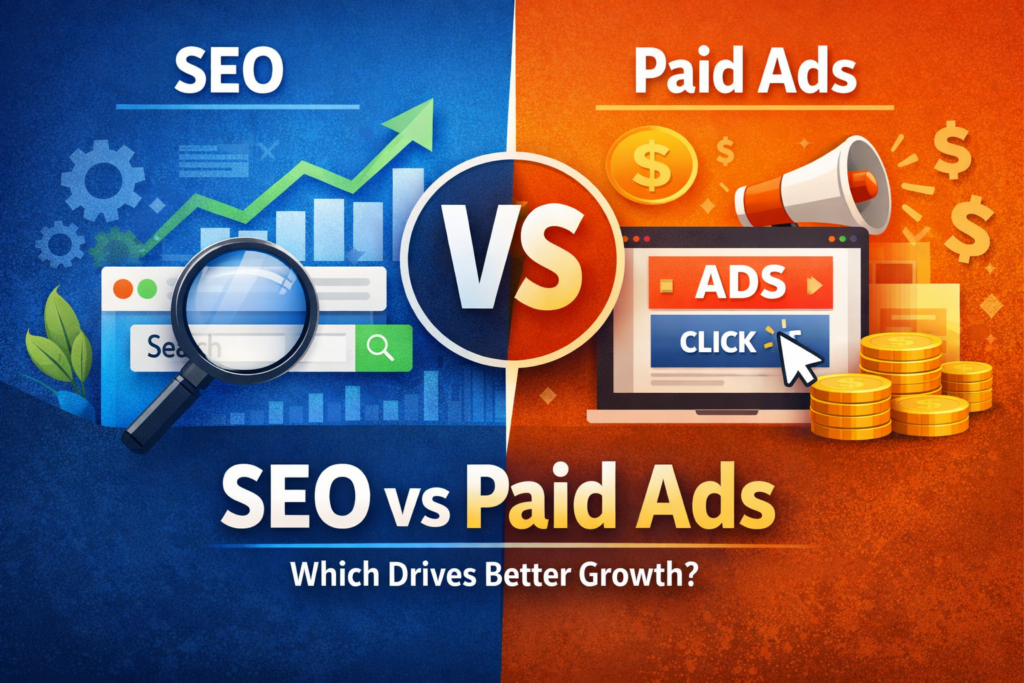
Both strategies can generate leads and revenue, but they work in very different ways. Understanding the difference between SEO vs paid ads helps you choose the right approach for your business goals.
What Is SEO
Search Engine Optimization (SEO) is the process of improving your website to rank higher on search engines like Google.
It focuses on:
- Organic traffic
- Long-term visibility
- Content and authority
SEO helps you attract users who are actively searching for your services.
What Are Paid Ads
Paid ads are advertisements where you pay to appear at the top of search results or on social media platforms.
Examples include:
- Google Ads
- Facebook Ads
- Instagram Ads
Paid ads generate immediate traffic and leads.
SEO vs Paid Ads: Key Differences
| Factor | SEO | Paid Ads |
|---|---|---|
| Cost | Low long-term | Ongoing cost |
| Speed | Slow (3 to 6 months) | Immediate |
| Traffic | Organic | Paid |
| Sustainability | Long-term | Stops when ads stop |
| ROI | High over time | Fast but variable |
Advantages of SEO
1. Long-Term Results
SEO continues to generate traffic even after initial work is done.
2. Cost-Effective
Once rankings improve, the cost per lead decreases significantly.
3. High Trust and Credibility
Users trust organic results more than ads.
4. Sustainable Growth
SEO builds a long-term asset for your business.
Advantages of Paid Ads
1. Instant Results
Paid ads can generate leads immediately.
2. Targeted Audience
You can target specific demographics, locations, and interests.
3. Scalable
Increase budget to get more traffic quickly.
4. Measurable Performance
You can track every click, lead, and conversion.
When to Choose SEO
SEO is ideal when you want:
- Long-term growth
- Consistent organic traffic
- Lower cost per lead over time
- Strong online presence
Best for businesses focused on sustainability.
When to Choose Paid Ads
Paid ads are ideal when you need:
- Immediate leads
- Quick testing of offers
- Fast business growth
- Seasonal campaigns
Best for short-term results and quick scaling.
The Best Strategy: Combine SEO and Paid Ads
The most effective approach is not choosing one over the other. It is combining both.
How it works:
- Use paid ads for immediate traffic
- Build SEO for long-term growth
This creates a balanced and powerful marketing system.
Example Growth Strategy
A business implemented:
- Google Ads for instant leads
- SEO content for long-term traffic
Result:
- Immediate revenue from ads
- Increasing organic traffic over time
- Reduced dependency on paid ads
Common Mistakes to Avoid
Avoid these mistakes:
- Relying only on ads
- Ignoring SEO
- Not tracking ROI
- Poor landing page optimization
Balance is key to success.
Cost Comparison
SEO
- Initial investment in content and optimization
- Lower cost over time
Paid Ads
- Continuous spending required
- Cost depends on competition
Understanding costs helps you allocate budget effectively.
How to Decide What’s Right for You
Ask yourself:
- Do I need leads quickly? → Paid ads
- Do I want long-term growth? → SEO
- Do I have budget for both? → Combine both
Your goals should guide your decision.
- https://themvcagency.com/seo-services/
- https://themvcagency.com/google-ads-management/
- https://themvcagency.com/digital-marketing-growth/
Conclusion
The debate between SEO vs paid ads is not about which is better. It is about which is right for your current stage of business.
SEO builds long-term growth, while paid ads deliver immediate results.
The most successful businesses use both strategies together to create consistent and scalable growth.
FAQ Section
Which is better SEO or paid ads
Both are effective. SEO is better for long-term growth, while paid ads provide immediate results.
How long does SEO take
SEO usually takes 3 to 6 months to show results.
Are paid ads expensive
Costs depend on competition, but they can deliver fast returns when optimized properly.
Can I use both SEO and paid ads
Yes, combining both strategies is the most effective approach.