Introduction
Your website is not just a digital presence. It is your most powerful sales tool.
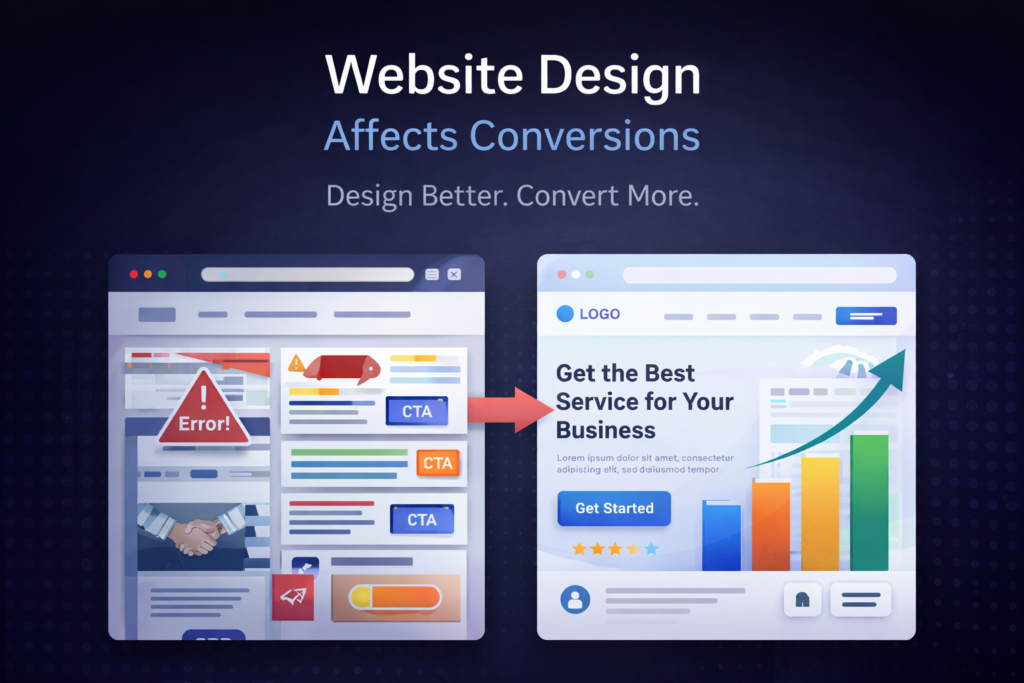
Many businesses invest in traffic but fail to convert visitors into leads or customers. The reason is simple: poor design.
Effective website design conversion optimization ensures that every visitor is guided toward taking action, whether it is filling a form, booking a call, or making a purchase.
What Is Website Design Conversion Optimization
Website design conversion optimization focuses on improving the design, structure, and user experience of your website to increase conversions.
It is not just about how your website looks. It is about how it performs.
A high-converting website:
- Is easy to navigate
- Loads fast
- Builds trust instantly
- Guides users toward action
Why Website Design Directly Impacts Conversions
Visitors decide within seconds whether to stay or leave your website.
Your design influences:
- First impression
- Trust level
- User experience
- Decision-making
If your website is confusing or outdated, users will leave without taking action.
Key Design Elements That Affect Conversions
1. First Impression and Visual Appeal
Your homepage should immediately communicate:
- What you offer
- Who it is for
- Why it matters
Clean, modern design builds credibility instantly.
2. Clear Call-to-Action
Every page should guide users toward a specific action.
Examples:
- Book a consultation
- Get a quote
- Contact us
Use clear buttons and place them strategically across the page.
3. Page Speed
Slow websites lose visitors quickly.
A fast-loading site improves:
- User experience
- Engagement
- Conversion rates
Optimize images, code, and hosting for better performance.
4. Mobile Responsiveness
Most users visit websites from mobile devices.
Your website must:
- Adapt to all screen sizes
- Be easy to navigate on mobile
- Have clickable buttons
Mobile-friendly design is essential for conversions.
5. Trust Elements
People only convert when they trust your business.
Add:
- Testimonials
- Reviews
- Case studies
- Certifications
Trust signals reduce hesitation and increase conversions.
6. Simple Navigation
Users should find information quickly.
Avoid:
- Complex menus
- Too many options
- Confusing layouts
Keep navigation simple and intuitive.
7. Content Structure
Good design supports content clarity.
Use:
- Headings
- Short paragraphs
- Bullet points
- Visual hierarchy
Make content easy to scan and understand.
Conversion-Focused Website Structure
A high-converting service website should include:
Hero Section
- Clear headline
- Value proposition
- Strong CTA
Services Section
- Clearly defined services
- Benefits and outcomes
Social Proof
- Testimonials
- Client logos
- Case results
Call-to-Action
- Repeated across the page
- Easy to find
Step-by-Step Optimization Strategy
Step 1: Audit Your Current Website
Identify issues such as:
- High bounce rate
- Low conversions
- Poor user experience
Step 2: Improve Design and UX
Focus on:
- Layout
- Speed
- Mobile experience
Step 3: Optimize CTAs
Ensure every page has a clear next step.
Step 4: Add Trust Signals
Build credibility through real proof.
Step 5: Test and Improve
Use A/B testing to improve:
- Headlines
- Buttons
- Layouts
Continuous improvement leads to better results.
Common Website Design Mistakes
Avoid these:
- Cluttered design
- No clear CTA
- Slow loading speed
- Poor mobile experience
- Lack of trust elements
Fixing these can significantly increase conversions.
Real Example
A service business redesigned its website by:
- Simplifying layout
- Improving page speed
- Adding clear CTAs
- Including testimonials
Result:
- Higher engagement
- Increased leads
- Better conversion rate
How Better Design Drives Growth
When your website is optimized:
- More visitors convert into leads
- Cost per lead decreases
- Marketing ROI improves
Your website becomes a conversion machine.
- https://themvcagency.com/website-design-development/
- https://themvcagency.com/conversion-rate-optimization/
- https://themvcagency.com/landing-page-design-services/
Conclusion
Website design is not just about aesthetics. It is a critical factor in business growth.
With proper website design conversion optimization, you can turn your website into a powerful tool that attracts, engages, and converts visitors consistently.
Investing in better design means investing in better results.
FAQ Section
What is website design conversion optimization
It is the process of improving website design to increase conversions and user engagement.
How does design affect conversions
Good design improves user experience, builds trust, and guides users toward action.
What is the most important design element
Clear call-to-action and user experience have the biggest impact.
How can I improve my website conversions
Focus on speed, mobile optimization, clear messaging, and trust signals.